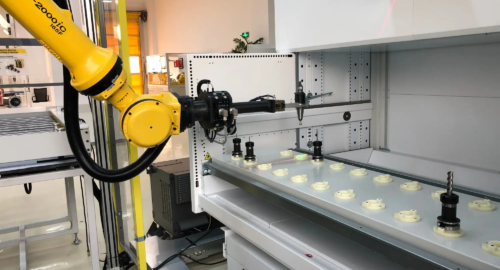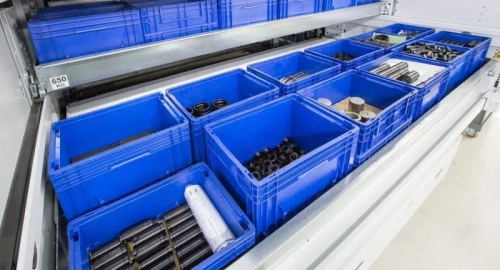







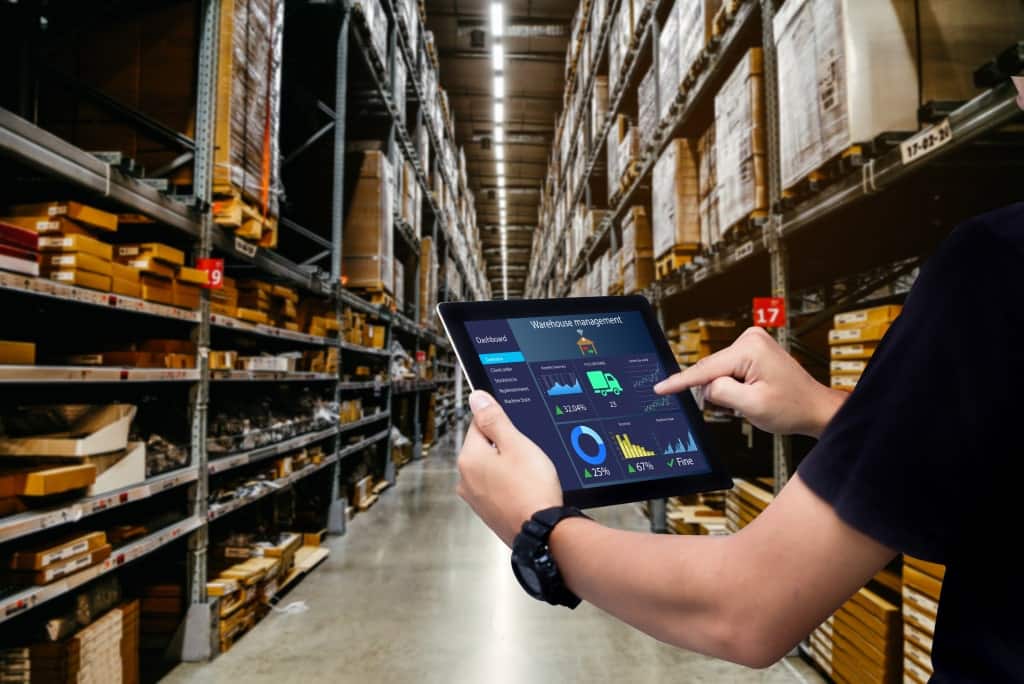
无论是确保客户收到准确的订单, 员工在工作场所的安全,还是库存防盗,遵循仓库管理的最佳实践可以帮助您提高生产力,改善安全和简化操作。
从批量拣选和预防性维护到智能存储和自动化解决方案,我们将与您分享可以实施的技巧、诀窍和工具,以使您的仓库更有效率。
仓库管理,提高生产力的最佳实践
拣选是仓储行业的一个关键过程,该过程的速度和效率可以影响到客户满意度和盈亏。
1.审查您的SKU类型和运行方式以及目前的订单执行操作
规划高效仓库的第一步是分析当前仓库内所有SKU(最小存货单位)的操作和运行方式。
准确的 SKU分析 将揭示关于所存储产品类型的众多重要细节,例如大小、配置、库位、补充数量和时间。
另一方面, 详细的订单概况 也是一个关键因素,可以对拣选生产率产生重要影响。这些订单概况包括诸如一批订单中SKU的共性、SKU和纸箱的尺寸范围、批量行数、批量功能、估预估拣选率和补货程序等。这些信息决定了纸箱的数量和比率以及拣选和包装要求。
审查SKU类型和订单概况:
- 分析每个SKU的周转速度, 确定哪些产品周转慢,哪些产品需求量大
- 将周转快、受欢迎的SKU放在容易拣选的区域,靠近发货区。 这将加快订单的准备过程。考虑将这类产品储存在自动存储系统中,以优化拣货和补货时间。
- 经常分析SKU类型和速度。 一些业务可能在一周的特定日子或需求高峰期有不寻常的需求高峰。
- 按SKU的速度、大小、季节性和存储要求对库存进行分组
- 将经常被拣选的SKU组合在一起, 放在同一个存储区域。
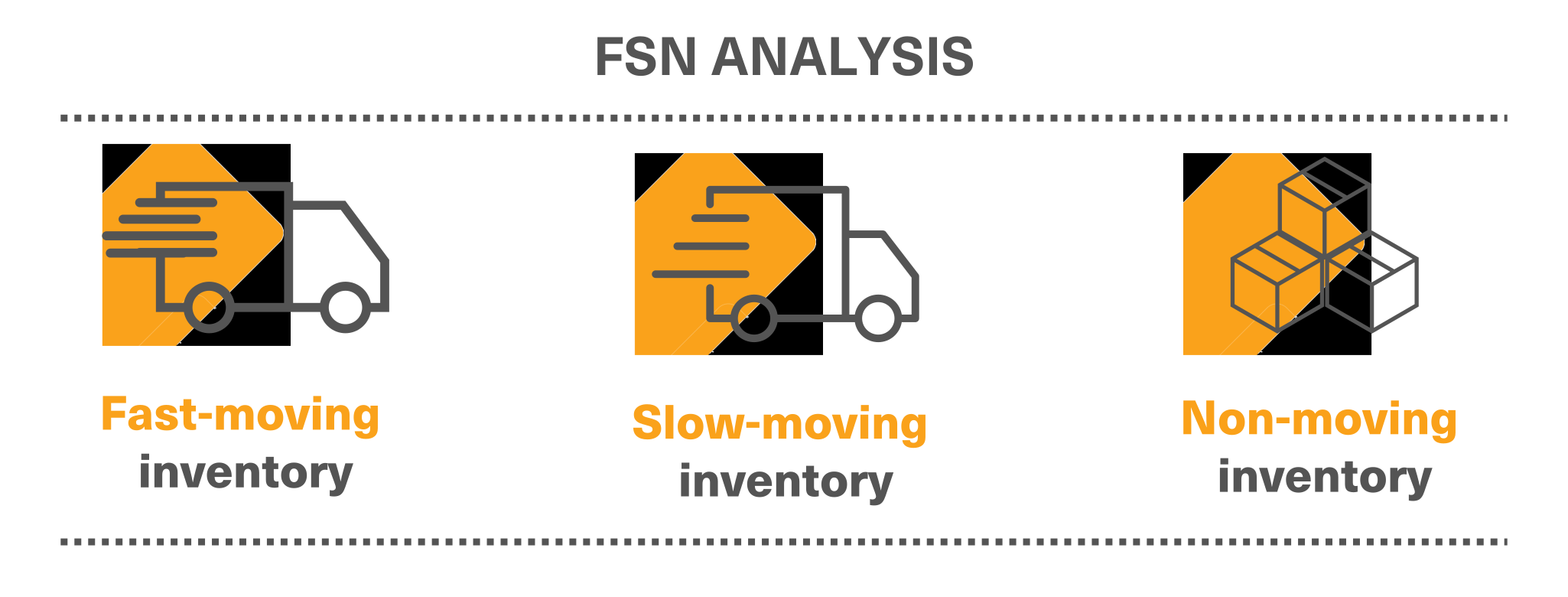
分析是一种库存管理技术,根据利用率、消耗量和平均停留时间,将库存分为三类
2.实施批量拣选
批量拣选或多订单拣选是一种允许操作员同时拣选多个批次或订单的方法。
要实施批量拣选,您需要:
- 创建一个拣选清单,列出需要取出的物品,以及位置和数量。
- 在每一批中对相同的物品进行分组
- 整合仓库管理系统以进一步简化流程
3.利用波段拣选来处理优先订单
波段式拣选或批量拣选是一种允许员工根据发货期限、承运人类型或仓库区域同时挑选订单的拣选形式,提高了效率并节省了时间。
使用波段拣选法,员工会收到一份拣选清单,其中包括需要拣选并送去包装的优先订单。然后员工进行拣货,每波包括4-12个订单。
与批量拣选不同的是,员工根据相同的产品和数量来批量拣选订单, 波段拣选侧重于运输日期–这使得它成为运输期限紧迫的订单的理想拣选方法。
要实施波段拣选,您需要:
- 根据优先运输、承运人或同类产品对订单进行分组
- 创建一个拣货清单,每个仓库拣货员负责4-12个订单
- 为每个订单指定一个仓库拣货员
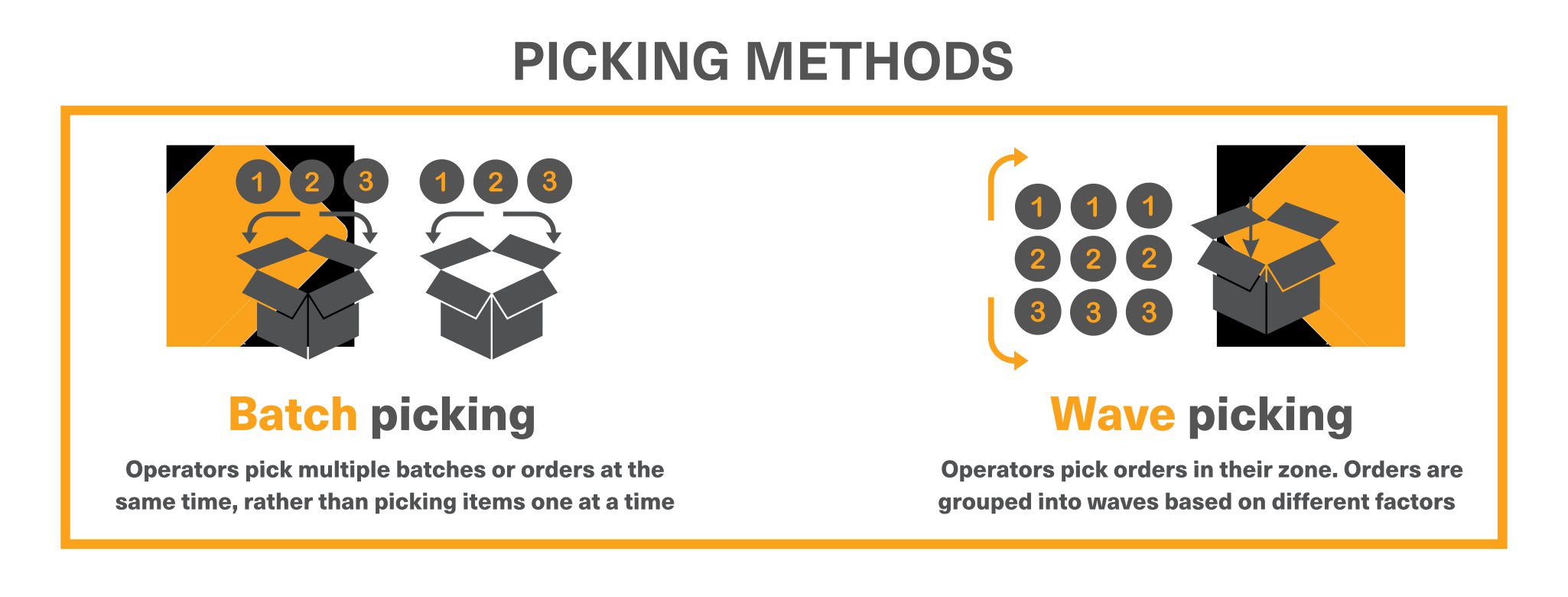
提高仓库生产力的方法:批量拣选或波段拣选
仓库安全管理最佳实践
确保一个安全的工作场所不仅对您的员工至关重要,对您的品牌声誉和盈亏也至关重要。提高仓库的安全性包括:
1.确保工作环境符合人体工程学
仓库员工的日常工作往往包括从狭小的地方拣取货物和举起沉重的产品,这可能导致工伤。
事实上,过劳在2021年被列为美国 最大的 致残性工伤。
整合人体工程学原则和垂直升降货柜可以帮助防止在工作场所受伤。
为确保您的仓库是符合人机工程学的环境,您需要:
- 将重物放置在腰部以下的位置,并将经常拣选的物品存放在眼睛的高度,以达到战略性地存储物品的目的。
- 整合符合人体工程学的垂直升降货柜,将物品以舒适的高度运送到仓库操作员面前。
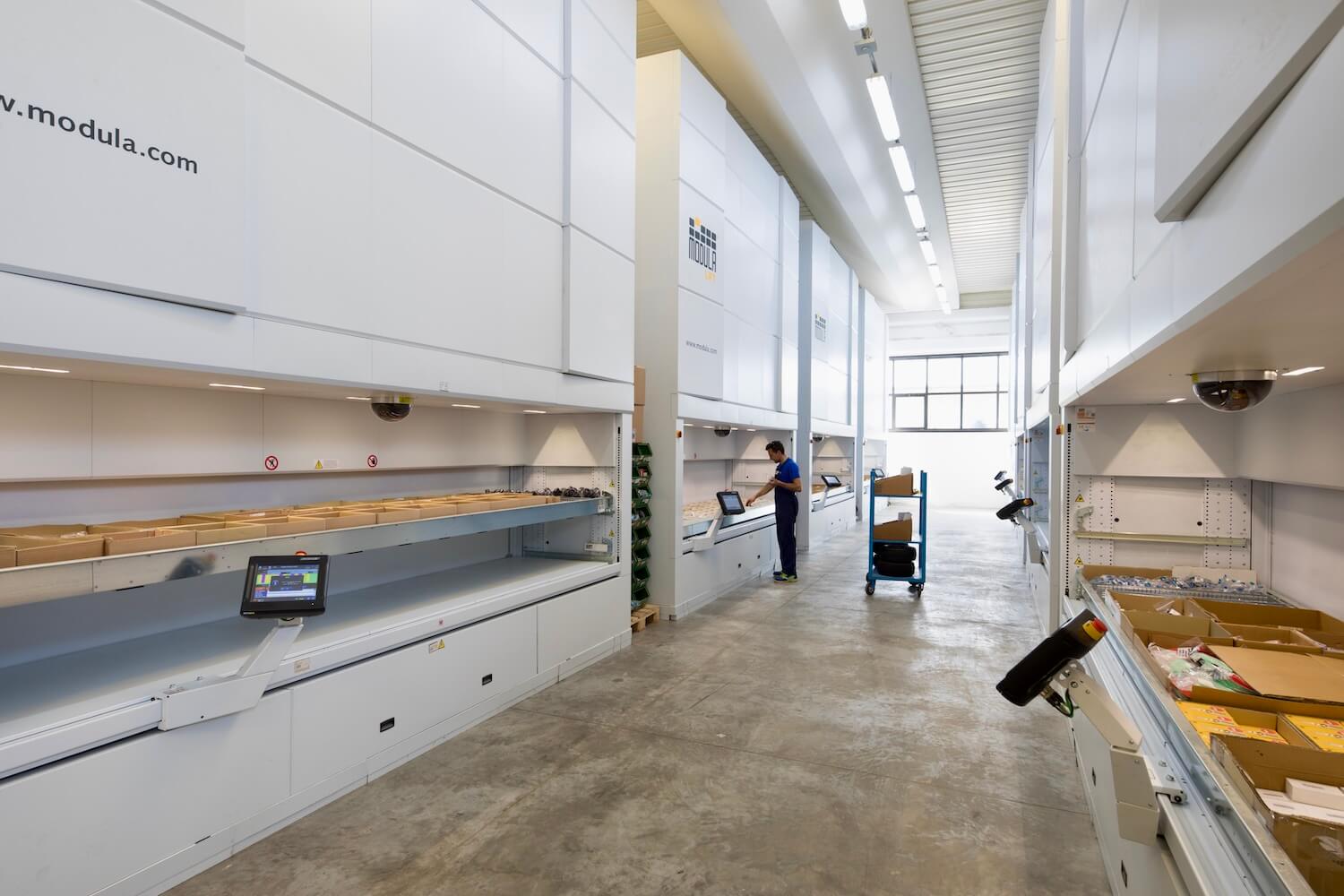
自动存储和检索系统将物品以舒适的高度送到仓库操作员手中。
2.利用指示牌和标签
在仓库中使用指示牌和标签,确保员工采取适当的预防措施,避免安全隐患
整个仓库的指示牌可能包括出口标志、机器安全指示、防护装备和强调有害化学物质的产品标签。
在仓库中使用指示牌和标签:
- 确保指示牌清晰易懂
- 通过颜色来规范指示牌 – 例如,安全警告用红色,交通标志用黄色
仓库管理库存管理的最佳实践
从库存防盗到防止缺货的情况,以下是管理仓库库存需要遵循的最佳实践:
1.补足库存
库存补充有助于防止缺货、不可用库存、缺货或货物中缺少某些物品。
为了补充库存,您需要:
- 利用安全库存,也称为额外库存,以防止缺货。
- 对在旺季(如黑色星期五和圣诞节)销售的快速流动商品进行准确的需求预测。
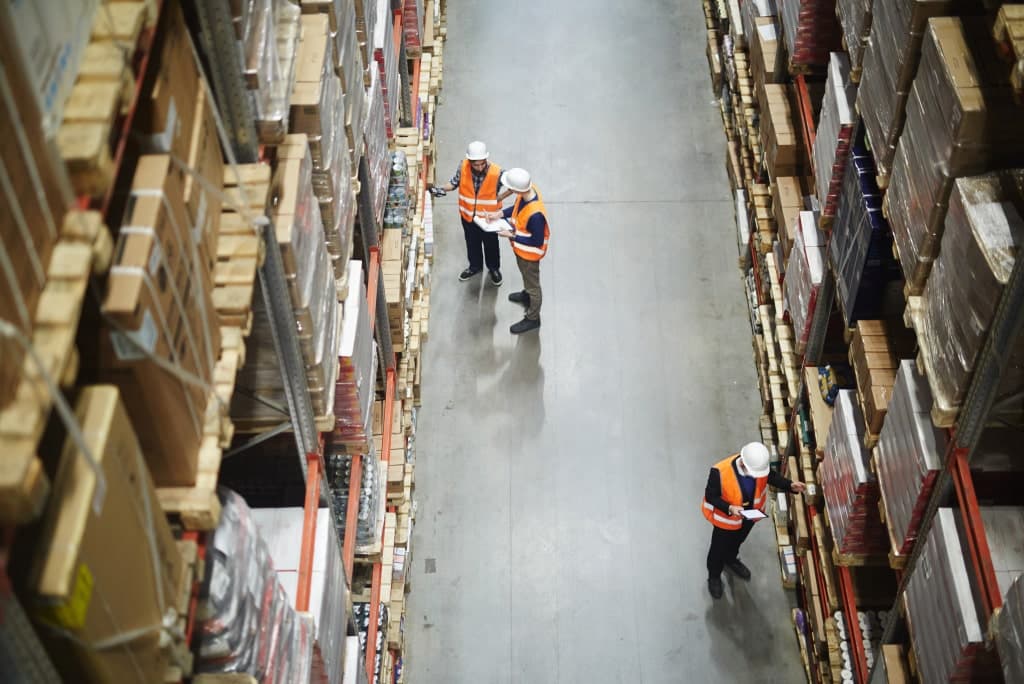
定期补充你的库存,确保你在任何时间或季节都有产品可用
2.保护货物免遭盗窃
无论您是小企业还是大企业,只要缺乏安全措施,就会发生盗窃。
事实上,即使是零售巨头 亚马逊也经历过仓库失窃。
为了保护仓库货物不被盗,您需要:
- 监控员工
- 进入存储区域设置权限
- 采用仓库管理软件来管理货物流动
- 利用自动化存储,在封闭和安全的环境中保护货物
仓库管理组织性的最佳实践
从最大限度地利用可用空间到使用货柜,以下是如何组织仓库中的货物。
1.利用货柜、小柜子和抽屉
无论是储存小零件还是将物品归入分类库存,货柜、小柜子和抽屉都能让员工快速准确地识别和检索物品。
利用仓库中的货柜、小柜子和抽屉:
- 确定所需货柜的类型
- 根据尺寸来存储产品
2. 利用垂直升降以节省空间
根据最近的 一份报告, 到2025年,美国的公司将需要2700万平方米的额外仓储空间来满足电子商务的上升需求。
这些额外的仓库空间每平方米可能要花费0.7美元左右,但利用垂直空间可以帮助您节省资金,同时最大限度地利用空间。
为了利用您的垂直高度来节省空间,请安装 Modula 垂直升降式货柜—我们有需要配置可选! Modula!
3.充分利用仓库整合
仓库整合是在合并仓库或物流设施中合并订单的过程。当储存准备交付的货物时,您可以清除你当前仓库的额外库存。
仓库管理维护的最佳实践
当涉及到仓库维护时,最佳实践可以帮助您提前发现安全隐患和节省昂贵的维修费用。以下是要添加到管理清单中的内容,以简化维护工作。
1.对仓库设备进行预防性维护
更换仓库设备十分昂贵。例如,一台全新的电动叉车从20,000美元到45,000美元不等。防止需要全面更换的最好方法是预防性维护。
定期检查仓库设备可以让您在问题出现时准确定位,这样就可以在问题变得更大并导致昂贵的更换之前计划更具成本效益的维修。
除了省钱之外,预防性维护还有助于消除仓库运营中的非计划停工。
对仓库设备进行预防性维护,您需要:
- 建立一个详细的仓库设备检查表,包括检查符合 OSHA 标准的设备安全性
- 根据设备安排预防性维护检查(例如,电动叉车应每天检查,在使用前和使用后)。
- 编制详细的报告,跟踪设备状态
2.定期进行仓库审计
仓库审计是一份由仓库经理执行的待办事项清单,以确保仓库的有效运行。
仓库审计可以适用于审计仓库的任何流程,无论是库存,运输或程序。
要进行仓库审计,您需要:
- 创建一个仓库审计清单,包括检查库存、政策和程序,以及运输和物流等要点。
- 每隔几周或按季度进行审计
Modula 的仓库管理自动化解决方案
从节省空间和保护库存到提高产量并确保员工工作场所符合人体工程学, 我们用最先进的自动化存储和检索系统将仓库管理提高到一个新的水平。
1.垂直升降货柜
无论是最大限度地利用仓库的高度空间,还是为您的员工提供符合人体工程学的解决方案,我们的立体货柜方案提供了以下的好处:
- 提升每小时300行 或以上的拣选速度
- 通过一个封闭的系统来保护货物, 限制未经授权的员工进入。
- 通过易于使用的 Copilot控制台自动获取物品
- 通过记录和跟踪 拣选操作来管理完整的库存可视性
- 员工不需再攀爬扶梯, 提高员工的安全性
- 通过利用垂直高度, 节省90%的地面空间
Modula 提供2种不同的垂直升降货柜:
- Modula Lift, 我们最受欢迎的货柜
- Modula Slim, 我们为空间有限的仓库提供最紧凑的存储解决方案
请观看 Modula Lift的运行
2.水平回转货柜
当天花板高度有限时, 我们的水平回转货柜 可作为最佳存储解决方案。
除了实时监控分拣操作,消除仓库中不必要的移动,并为员工提供最理想的工作场所,我们的水平回转货柜还允许您:
- 通过高密度和紧凑的 存储区域存储更多货物
- 利用控制台功能快速、准确地 拣选物品
- 利用 我们的 Modula 仓库管理系统提高准确性和生产力
- 使用我们的条码阅读器和播种式显示屏系统,确保99%的拣选 准确率
- 提升拣选率至每个操作员每小时高达550 行
请观看 Modula 水平回转货柜的运行
3.仓库订单拣选解决方案
无论是处理批量和多个订单,还是引导仓库员工到准确的位置,我们的订单拣选解决方案都能简化您的拣选操作。
Modula 仓库订单拣选解决方案包括:
- Modula 播种式 显示屏引导仓库员工到达准确的位置
- 移动式拣选站 可在较短的时间内处理大量的订单
- Modula 拣选车 用于将存货运送到仓库内的不同位置
- Modula 移动拣选应用程序 通过您的平板电脑或智能手机管理人工拣选操作
详细了解我们的拣选解决方案!
Modula 的自动化解决方案使您能够实施仓库管理的最佳实践,并全面简化操作。
从我们先进的分拣解决方案到智能存储选项,您可以通过 Modula 提高生产力、安全性和有序性!

Whether it’s ensuring that your customers receive accurate orders, your employees are safe in the workplace or your inventory is protected from theft, following best practices in warehouse management can help you increase productivity, safety and streamline your operations.
From batch picking and preventative maintenance to smart storage and automated solutions, we’ll share the tips, tricks, and tools you can implement to make your warehouse more efficient.
Best Practices in Warehouse Management for Productivity
Picking is a key process in the warehousing industry, and the speed and efficiency with which it is carried out can affect everything from customer satisfaction to your bottom line.
1. Review Your SKU Type and Movement and Your Current Order Fulfillment Operation
The first step in planning an efficient warehouse is to analyse the current operation and the movement of all SKUs (stock-keeping units) within the warehouse.
An accurate SKUs analysis will reveal many important details about the type of products stored, such as size, configuration, slotting, replenishment quantities, and time.
On the other hand, a detailed order profile is a critical factor that can have an important impact on picking productivity. These order profiles include such things as the commonality of SKUs across orders in a batch, SKU and carton size ranges, batch line count, batch functionality, estimated pick rates, and replenishment procedures. This information determines the carton quantities and rates and picking and packing requirements.
To review SKU type and order profiles:
- Analyse the turnover speed of each SKU to determine which products are slow-moving and which ones are high in demand.
- Place fast-moving, popular SKUs in an easy-to-access area, close to the shipping area. This will speed up the order preparation process. Consider storing this type of product in automated storage systems to optimise picking and replenishment time.
- Analyse SKU type and velocity often. Some operations may have unusual spikes of activity on specific days of the week or during peak demand periods.
- Group inventory by SKU velocity, size, seasonality, and storage requirement.
- Combine SKUs frequently picked together in the same storage area.

FSN Analysis is an inventory management technique that divides the inventory into three categories based on the rate of utilisation, consumption, and the average stay.
2. Implement Batch Picking
Batch picking or multi-order picking is a method that allows your operators to pick multiple batches or orders at the same time.
To implement batch picking:
Create a picking list or a document that lists the items that need to be retrieved, along with the location and quantity.
Group the same items in each batch.
Integrate a warehouse management system to further streamline the process.
3. Utilise Wave Picking for Priority Orders
Wave picking or cluster picking is a picking method that allows your employees to simultaneously pick orders based on shipping deadlines, the type of shipping carrier or the warehouse zone, increasing efficiency and eliminating warehouse travel time.
With the wave picking method, an employee receives a picking list which includes priority orders that need to be picked and sent over to packing. The employee then picks the goods, which includes 4-12 orders per wave.
Unlike batch picking where the employee picks orders based on same items and quantity, wave picking focuses on shipping dates — making it the ideal picking method for orders with tight shipping deadlines.
To implement wave picking:
- Group orders based on priority shipping, carrier or like products.
- Create a pick list that includes 4-12 orders per warehouse operator.
- Assign a warehouse operator for each order.

Picking Methods to improve warehouse productivity: batch picking or wave picking
Best Practices in Warehouse Management for Safety
Ensuring a safe workplace is not only vital for your employees, but for your brand’s reputation and your bottom line. To improve safety in your warehouse:
1. Ensure an Ergonomic Environment
A warehouse employee’s routine often includes collecting items from hard-to-reach areas and lifting heavy products, which can lead to overexertion injuries.
In fact, overexertion ranked as the top disabling workplace injury in the United States in 2021.
Integrating ergonomic modules and lifts can help prevent workplace injuries.
To ensure an ergonomic environment in your warehouse:
- Store items strategically by placing heavy items below waist level and storing frequently picked items at eye level.
- Integrate ergonomic modules and lifts to deliver items to your warehouse operators at a comfortable height.

Automated Storage and retrieval Systems deliver items to your warehouse operators at a comfortable height
2. Utilise Signage and Labels
Use signs and labels in your warehouse to note safety hazards and ensure employees take proper precautions.
Signs throughout your warehouse might include those for exit doors, machine safety directions, protective gear, and product labels to emphasise harmful chemicals.
To utilise signs and labels throughout your warehouse:
- Ensure signs are clear and easy to understand.
- Standardise signage through color coordination — For example, use red for safety warnings and yellow for traffic signs.
Best Practices in Warehouse Management for Inventory
From protecting inventory from theft to preventing out-of-stock scenarios, here are the best practices to follow for managing your warehouse inventory:
1. Replenish Your Inventory
Inventory replenishment helps prevent stockouts, unavailable inventory, short picks, or missing items in a shipment.
To replenish your inventory:
- Utilise safety stock, also known as additional inventory, to prevent stock-outs.
- Use accurate demand forecasting for fast-moving items that get sold during peak seasons, such as Black Friday and Christmas

Replenishing your inventory regularly ensures you have products available at any time or season.
2. Protect Goods From Theft
Whether you own a small business or large enterprise, theft can occur when security measures are lacking.
In fact, even retail giant Amazon has experienced warehouse theft.
To protect warehouse goods from theft:
- Monitor your staff.
- Restrict access to storage areas.
- Implement warehouse management software to assess transactions.
- Utilise automated storage to secure goods in an enclosed and secure environment.
Best Practices in Warehouse Management for Organisation
From maximising your available space to using containers, here’s how to organise goods in your warehouse:
1. Utilise Containers, Cabinets and Drawers
Whether it’s storing small parts or grouping items into categorised inventory, storage containers, cabinets and drawers allow your employees to identify and retrieve items quickly and accurately.
To utilise containers, cabinets, and drawers in your warehouse:
Identify the type of container needed.
Store products based on size.
2. Think Vertically to Save Space
According to a recent report, companies in the United States will need 27 million square meters of additional warehouse space by 2025 to keep up with the uptick in eCommerce demand.
While this additional warehouse space can cost around $75 per square meter, going vertical can help you save money while maximising your available space.
To save space using your available ceiling height, integrate vertical lift modules — like the models we offer at Modula!
3. Leverage Warehouse Consolidation
Warehouse consolidation is the process of combining orders in one consolidation warehouse or logistics facility. When you store shipments that are ready to be delivered, you can clear your current warehouse from additional inventory.
Best Practices in Warehouse Management for Maintenance
When it comes to warehouse maintenance, best practices can help you identify safety hazards and costly repairs ahead of time. Here’s what to add to your management list to streamline maintenance:
1. Perform Preventive Maintenance for Warehouse Equipment
Replacing warehouse equipment can be costly. For example, a brand-new electric forklift can range from $20,000 to upwards of $45,000. The best way to prevent the need for a full replacement is preventative maintenance.
Examining warehouse equipment on a regular basis allows you to pinpoint issues as they arise, so you can plan more cost-effective repairs before the issue becomes bigger and results in a costly replacement.
In addition to saving money, preventive maintenance helps eliminate unplanned downtime in warehouse operations.
To perform preventive maintenance for warehouse equipment:
- Create a detailed warehouse equipment checklist that includes inspecting equipment safety that meets OSHA standards.
- Schedule preventative maintenance checks based on the equipment (for example, electric forklifts should be checked every day, before and after use).
- Compile detailed reports to keep track of equipment status.
2. Conduct Regular Warehouse Audits
A warehouse audit is a checklist of to-do tasks performed by warehouse managers to ensure a warehouse is running efficiently.
Warehouse audits can apply to auditing any part of your warehouse, whether it’s your inventory, shipping , or procedures.
To conduct a warehouse audit:
- Create a warehouse audit checklist, including points such as inspecting inventory, policies and procedures, as well as shipping and logistics.
- Perform audits every few weeks or on a quarterly schedule.
Modula’s Automated Solutions for Warehouse Management
From saving space and securing inventory to increasing throughput and ensuring an ergonomic workplace for your employees, we take warehouse management to the next level with the most advanced automated storage and retrieval systems.
1. Modula Vertical Lift Modules
Whether it’s maximising your existing warehouse ceiling height or providing an ergonomic solution for your employees, our vertical solutions provide a wide array of benefits:
- Boost picking speeds of 300 lines per hour or more.
- Secure goods with an enclosed system with limited access for unauthorised employees.
- Obtain items automatically with a user-friendly Copilot controller.
- Manage complete inventory visibility with documented and tracked picking operations.
- Increase employee safety by eliminating the need to reach for items in high or low places.
- Save 90% of floor space by utilising available ceiling height.
At Modula, we offer two vertical lift modules:
- Modula Lift, our most popular vertical lift solution
- Modula Slim, our most compact storage solution for warehouses with limited space coverage.
2. Modula Horizontal Carousels
When ceiling height is limited, our Modula Horizontal Carousels serve as the optimal storage solution.
In addition to monitoring your picking operations in real-time, eliminating unnecessary travel in your warehouse and providing the most ideal workplace for your employees, our Horizontal Carousels allow you to:
- Store more goods with high-density and compact storage areas.
- Pick items quickly and accurately with the digital Copilot feature.
- Boost accuracy and productivity with our Modula Warehouse Management Systems.
- Ensure 99% picking accuracy with our barcode readers and Put to Light Systems.
- Experience picking rates of up to 550 lines per hour for each operator.
3. Modula Warehouse Order Picking Solutions
Whether it’s dealing with batch and multi-orders or guiding warehouse employees to accurate locations, our order picking solutions can streamline your picking operations.
Our Modula Warehouse Order Picking Solutions include:
- Modula Put to Light to guide your warehouse employees to accurate locations.
- Mobile Picking Station for processing large quantity orders in less time.
- Modula Picking Cart for transporting inventory to different locations within your warehouse.
- Modula Mobile Picking App to manage manual picking operations through your tablet or smartphone.
Our automated solutions at Modula allow you to implement best practices for warehouse management and streamline operations across the board.
From our advanced picking solutions to smart storage options, you can improve productivity, safety, and organisation with Modula!