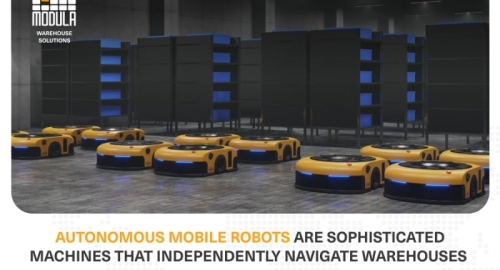






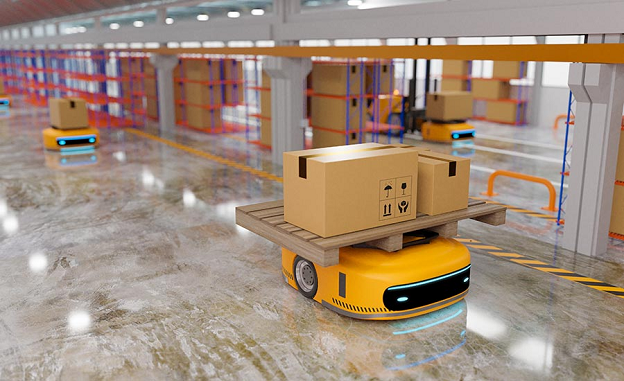
自动导引车(AGVs)是一种无人驾驶设备,用于在仓库和工厂中运输货物。
对于面临人力短缺或空间受限的仓库运营来说,AGV 能够帮助优化工作流程、减少人工劳动,并提升整体效率。
此外,AGV 可以在狭窄的通道中穿行,全天候运作,并能处理重复性任务,从而让员工有更多精力专注于更复杂的工作,例如质检。
在本指南中,我们将为您全面介绍自动导引车(AGV),包括其类型、优势,以及 Modula APAC 提供的可与 AMR 无缝集成、助力提升仓库生产力的垂直升降模块(VLM)。
什么是自动导引车(AGVs)?
自动导引车是一种以电池驱动的机器人,用于在仓库中运输货物。
它被视为自主移动机器人(AMR)的前身,并通过视觉摄像头、无线电波、磁力或激光等方式来引导和导航。
自动导引车(AGVs)与自主移动机器人(AMRs)对比
自动导引车(AGVs)沿着由电缆、磁带或激光路径等标记物设定的固定路线行驶。
仓库操作员通常无需手动操作 AGV,而是设定路线、监控系统并管理工作流程,确保车辆高效运行。
而自主移动机器人(AMRs)则能通过人工智能、机器学习和动态生成的地图在仓库中自主导航。
AMR 配备摄像头和接近传感器,能够实时计算行驶路径,从而应对通道拥堵等不断变化的环境或障碍物。
仓库操作员可以指挥 AGV 去往指定地点,取走特定货物并将其运送到目的地。
在此过程中,借助车队管理软件(FMS)至关重要,该中央控制系统会评估物料请求(如新订单),并决定派出哪辆车来处理每一笔运输任务。
自动导引车(AGVs)的类型
市场上现有多种类型的 AGV,包括:
1. 自动导引搬运车(Automated Guided Carts)
AGC 是最基础的 AGV 形式,常用于分拣、储存和交叉配送等任务。
它可以运输多种物料,从小零件到整托盘均可应对。
2. 拖曳型 AGV(Towing AGVs)
拖曳车,又称牵引式 AGV,可像列车一样拖带多个无动力、承载货物的车厢。
这类车辆常被称为无人驾驶列车,依靠轮子行驶,适用于长距离运输重型货物。
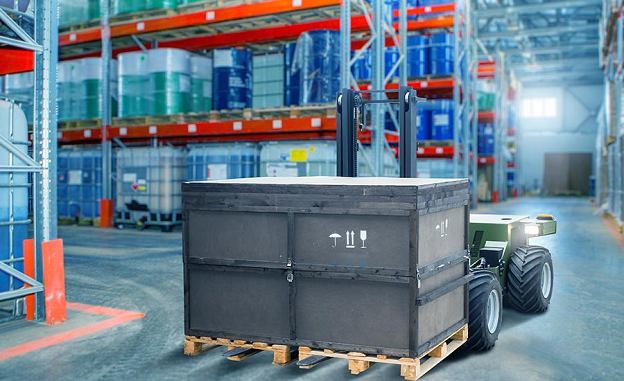
3. 叉车式 AGV(Forklift AGVs)
叉车式自动导引车,或称叉型车,能执行与人工叉车相同的任务,例如托盘搬运。
但与传统叉车不同,它无需人工操作。
4. 单元载具搬运车(Unit Load Handlers)
这类车辆用于在指定两点之间搬运单件货物,如托盘或物料箱。
可用于生产过程中各个环节的搬运和配送,如收货、储存及出货。
5. 重载搬运车(Heavy Burden Carriers)
重载搬运车可运输最重的货物,如铸件、大型线圈或钢板。
部分车型具备自加载功能,且可支持多种转向方式,包括标准转向、枢轴转向或全向转向。
自动导引车(AGVs)如何工作?
AGV 在工业环境中运行,依靠先进的导航系统移动物料。导航方式可从简单的磁带导航,到复杂的激光或摄像头导航系统。
- AGV 可使用磁性传感器识别地面上铺设的磁带或内嵌电缆形成的轨道。这些电缆会发出信号,AGV 通过传感器或天线接收并沿其行驶。
- AGV 的前进或后退,是通过两侧车轮保持同速实现的。
- AGV 利用传感器和摄像头探测障碍物,调整行驶路径以避免碰撞,并保障安全运行。某些区域设置了无线发射器,AGV 的传感器接收到信号后会返回响应。
- 如果路径畅通,AGV 会收到“通行”信号允许继续前进。配备“碰撞规避区域控制”的 AGV 还会主动发送信号,等待回应,以判断前方是否存在障碍。
- AGV 的软件系统负责协调任务与路径,并与仓库的管理系统集成,以接收任务指令和更新任务状态。
- AGV 通过 Wi-Fi 或其他无线网络与中央控制系统通信,接收导航指令并反馈执行情况。
将 AGV 与垂直升降模块集成,提速您的运营效率
将 AGV 与我们的自动化解决方案集成后,能大幅提升订单履行效率。
无论您的运营规模大小,我们的系统都能优化拣选精度、提高工作效率并保障员工安全。
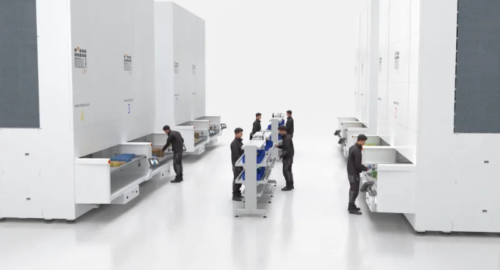
Modula APAC 提供的一项热门解决方案便是我们的 垂直升降模块(VLM)。这是一种全自动、紧凑型的垂直存储系统,通过垂直存放物料来最大限度地节省仓库空间。
订单激增?我们的 VLM 支持批量订单及多订单处理模式,在不中断订单履行流程的情况下提升产能。
这些垂直系统可确保庞大的库存既安全存储又快速可达,只需扫描条码或轻触直观的 Copilot 控制器,便可自动将物品送至操作员面前。
您也可以将现有的仓库系统与我们的拣选及仓库管理系统(WMS)整合使用,从而进一步提升准确率、效率与整体产出。我们的拣选解决方案易于部署,能够加速整个流程。
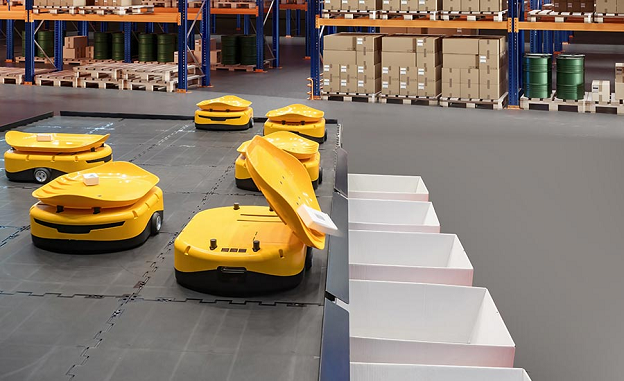

Automated guided vehicles (AGVs) are driverless machines that transport goods in warehouses and factories.
For warehouse operations facing labour shortages or limited space, AGVs can help optimise workflows, minimise manual labor, and boost overall efficiency.
Additionally, they can navigate narrow aisles, operate around the clock, and manage repetitive tasks, allowing your staff to tackle more complex duties, such as performing quality checks.
In this guide, we’ll share everything you need to know about automated guided vehicles (AGVs), including the types, their benefits, and Modula APAC’s vertical lift modules (VLMs) that seamlessly integrate with AMRs to boost productivity in your warehouse operations.
What Are Automated Guided Vehicles (AGVs)?
Automated guided vehicles are battery-powered robots that transport goods in a warehouse space.
They are considered the predecessors of autonomous mobile robots (AMRs) and use vision cameras, radio waves, magnets, and lasers to navigate a facility.
Automated Guided Vehicles (AGVs) vs. Autonomous Mobile Robots (AMRs)
Automated guided vehicles (AGVs) follow fixed routes guided by markers such as wires, magnetic strips, and laser paths.
Warehouse operators typically don’t need to manually operate AGVs. Instead, they set up routes, monitor systems, and manage workflows to ensure these vehicles operate effectively.
In contrast, autonomous mobile robots (AMRs) navigate the warehouse independently using artificial intelligence, machine learning, and dynamically generated maps.
Equipped with cameras and proximity sensors, AMRs calculate routes in real time so they can adjust to changing conditions and obstacles, such as cluttered pathways.
A warehouse operator can direct an AGV on where to go, what goods to pick up, and where to drop them off.
Leveraging fleet management software (FMS) is essential during this process, as central control systems assess requests for goods, such as incoming orders, and decide which vehicle to send for each load.
Types of Automated Guided Vehicles (AGVs)
Different types of automated guided vehicles are available on the market, including:
1. Automated Guided Carts
Automated guided carts (AGCs) are the simplest form of AGVs and are commonly used in sorting, storage, and cross-docking tasks.
AGCs can transport a wide range of materials, from small parts to full pallets.
2. Towing AGVs
Towing vehicles, also known as tugger automated guided vehicles, can haul multiple unpowered, cargo-bearing vehicles in a train-like sequence.
Often called driverless trains, these vehicles move on wheels and are typically used to transport heavy loads over long distances.
3. Forklift AGVs
Forklift automated guided vehicles, or fork vehicles, perform the same functions as human-operated forklifts, such as transporting pallets.
However, unlike a conventional forklift, they don’t require a human operator to function.
4. Unit Load Handlers
Unit load handlers are vehicles that transport individual items, such as pallets or totes, from point A to point B.
These machines facilitate in-process handling and distribution tasks, such as receiving, storing, and shipping.
5. Heavy Burden Carriers
Heavy burden carriers can transport the heaviest loads, such as castings, heavy coils, or plates.
These carriers may feature self-loading functions and offer various steering options, including standard, pivot, or omnidirectional.

How Do Automated Guided Vehicles (AGVs) Work?
Automated guided vehicles operate within industrial settings, utilising advanced navigation systems to move materials. Their navigation methods range from simple magnetic tapes to complex laser-guided or camera-based systems.
- Automated guided vehicles navigate facilities using systems like magnetic sensors, following tracks made of magnetic tape or wires embedded in the floor. These wires transmit signals that automated guided vehicles detect through sensors or antennas.
- For automated guided vehicles to move forward or backward, their wheels move at the same speed.
- Automated guided vehicles detect obstacles, adjust their routes to avoid collisions, and maintain safe operations using sensors and cameras. A wireless emitter dispatches signals in designated areas, and the AGV’s sensor picks up and echoes these signals.
- If the path is unobstructed, a “clear” signal permits the AGV to proceed. Vehicles equipped with “collision avoidance zone control” also emit a signal and wait for a response to detect any objects ahead.
- AGV software manages automated guided vehicles by coordinating tasks and routes, integrating with the facility’s management systems to receive and update task statuses.
- Automated guided vehicles communicate with a central control system via Wi-Fi or other wireless networks to receive directions and provide updates.
Speed Up Your Operations by Integrating AGVs With Vertical Lift Modules
Integrating AGVs with our automated solutions significantly enhances the order fulfillment process.
No matter the size of your operations, our systems optimise picking precision, workflow productivity, and employee safety.
One popular solution at Modula APAC is our VLMs. Our Vertical Lift Modules (VLMs) are fully automated, compact vertical storage systems that maximise space by vertically organising items and significantly reducing the warehouse footprint.
Facing an uptick in orders? Our VLMs support both batch and multi-order modes, boosting productivity without disrupting the order fulfillment flow.
These vertical systems ensure a vast inventory is readily accessible and securely stored, delivering items automatically to operators with a simple barcode scan or a tap on the intuitive Copilot controller.
You can also boost accuracy, efficiency, and overall productivity by combining your existing warehouse solutions with our picking and warehouse management system (WMS). Easy to implement, our picking solutions elevate accuracy and efficiently expedite throughput.

2. How often do you need to access items?
VLMs are the way to go if your operations require frequent access to a diverse range of items.
For example, if you run a distribution centre that handles a range of products—from electronics to clothing—a VLM can help your warehouse operators quickly and efficiently retrieve items during order picking.
3. What operational speed do you need?
In environments where time is crucial and rapid retrieval impacts workflow, consider vertical lift modules.
They operate at high speeds and allow access to multiple items from different shelves simultaneously.
This is especially beneficial in settings like automotive assembly lines or pharmaceutical distribution, where saving time on item retrieval can significantly boost efficiency.
4. What is your budget?
If you have a larger budget and seek a long-term, efficient, and adaptable solution, investing in a VLM is an excellent choice.
For instance, a manufacturing facility that stores high-value items can use the VLM’s advanced features and flexibility to prevent theft.
Find Cutting-Edge Vertical Lift Modules (VLMs) at Modula APAC
At Modula APAC, we provide automated vertical lift modules that expand your warehouse space by efficiently utilising your available ceiling height.
Our systems ensure your warehouse staff can easily access inventory, all while keeping goods stored in a safe and secure environment.
If you want to upgrade your storage space and improve operational efficiency, we offer a range of vertical lift modules, including:
- Modula Lift: Our most popular vertical lift module, Modula Lift, comes in a variety of sizes and capacities, helping businesses streamline and modernise their operations.
- Modula Slim: Modula Slim incorporates the same innovative storage technology as the Lift model, delivering equivalent advantages — greater efficiency and increased picking precision — in a more space-saving design. It’s perfect for storing individual materials and smaller items, such as boxes, bins, spare components, coils, bottles, and more.
- Modula Next: Modula NEXT, our next generation lift module, is equipped with advanced safety controls for automated warehouse picking. Its expertly designed bay opens only to the designated compartment, eliminating picking errors and item loss.
Reach out to our team to understand how our innovative vertical lift modules can streamline your warehouse operations.