





关键要点概览
- 投资仓库机器人通常在 3 到 5 年 内实现回报。
- 部署仓库管理系统(WMS)可在 3 到 6 个月 内看到收益。
- 计算 ROI 的方法:用收益减去成本,再除以成本,最后乘以 100 得出百分比。

仓库机器人已帮助众多企业将生产效率提升了 30%,因此在追求效率提升与运营成本降低时,它们成为了热门选择。
那么,何时能带来切实的财务收益?
仓库机器人与 WMS 的 ROI 时间各不相同——机器人通常为 3 至 5 年,WMS 则为 3 至 6 个月。
为了衡量它们的效益,关键在于正确计算 ROI。
本指南将:
- 概述仓库机器人与 WMS 的投资回报率
- 提供详细的 ROI 计算步骤
- 说明 Modula 亚太解决方案如何帮助你最大化投资回报
仓库机器人 ROI 分析
一般来说,仓库机器人投资可在 3 到 5 年 内收回成本。
决定是否投资机器人涉及多方面因素,包括行业竞争力和市场份额。
尽管这些因素不像财务指标那样容易量化,但在决策过程中同样至关重要。
如何计算仓库机器人的 ROI?
投资回报率(ROI)是一项评估年度收益与投资成本之间关系的重要指标。
ROI 越高,代表回报越大,投资吸引力也越强。
要计算仓库机器人投资的 ROI,需综合考虑其成本与收益。
我们将通过以下步骤,帮助你清晰了解如何制定仓储自动化战略。
第一步:明确成本
确定部署机器人系统所需的总投资,包括:
- 初始成本:采购、安装与系统集成费用
- 运营成本:维护、维修、软件更新和能源消耗
- 培训成本:员工操作与维护系统的相关培训费用
- 举例说明: 购买 5 台机器人,每台 $50,000,安装费用 $20,000,每年维护与培训费用 $10,000,总初始投入为 $270,000。
第二步:计算收益
量化机器人系统带来的财务收益,例如:
- 节省人工成本:因自动化减少员工数量
- 提高生产效率:提高产出或加快库存管理速度
- 降低差错率:减少错误所带来的退货或返工成本
举例说明: 机器人每年节省 $100,000 的人工成本,通过提升吞吐量增加 $50,000 的利润,减少错误相关成本 $20,000,总年收益为 $170,000。
第三步:计算 ROI
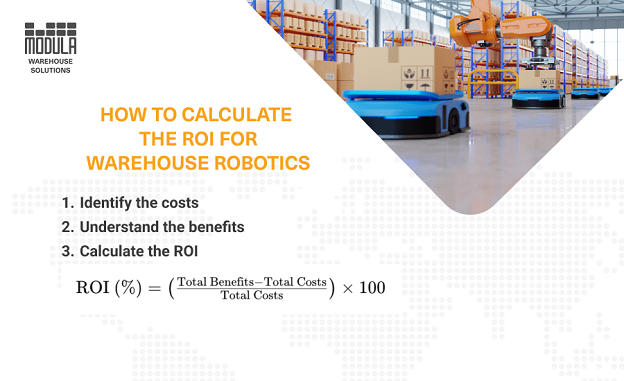
公式如下: ROI = [(收益 – 成本) ÷ 成本] × 100
计算示例:
- 第一年成本:$270,000
- 第一年收益:$170,000
- 净收益:$170,000 – $270,000 = -$100,000(第一年为负回报)
仓库机器人如何加速实现 ROI?
仓库机器人可通过提升效率与降低开支来加快 ROI 实现,具体方式如下:
1. 降低人工成本
机器人可自动执行拣选、包装、分拣等任务,大幅减少人力需求。
例如,一台自动移动机器人(AMR)可全天候工作于多个班次,人工成本有望减少一半。
举例说明: 若仓库每年在相关作业上支出 $500,000,引入 AMR 可节省 $250,000。
2. 提升生产效率与吞吐量
机器人作业速度快、时长长,可显著提高订单处理效率。
例如,货到人(G2P)系统可将拣选速度提升三倍,从而每年创造额外 $300,000 的收入。
3. 减少操作错误
机器人系统比人工更能有效控制差错,降低退货、返工与不准确导致的损失。
举例说明: 若拣选错误每年造成 $100,000 的损失,机器人扫描系统可将错误率降低 90%,每年节省 $90,000。
4. 优化仓库空间利用
自动化存储和检索系统(ASRS)可提升高达 25% 的存储密度,从而延缓或避免扩建需求,节省场地与运营开支。
投资回报率最高的两类仓库机器人
从长远来看,各种仓库机器人类型可以帮助您最大限度地节省成本。
以下两类机器人通常可实现最高 ROI:
自动移动机器人(AMR)
AMR 是希望逐步引入自动化、降低初期投资风险企业的理想选择。
其可自主搬运托盘和库存,减少人力开支,提高作业效率。
AMR 可释放员工资源,使其聚焦于更重要的任务,如质量检验。
货到人(G2P)机器人
通过让机器人将货品送到拣货员手中,该系统大幅减少人员走动时间。
同时,可更紧凑地存储 SKU,提高订单准确性并进一步降低成本。
WMS 投资回报时间表
仓库管理系统通常可在 3 到 6 个月 内实现投资回报。
随着操作流程的持续优化,更多收益将在 3 到 12 个月 内体现。
如何计算 WMS 的 ROI?
分步指南:
第一步:确认成本
计算WMS投资回报率的第一步是评估实施成本。
WMS 的部署成本通常包括:
- 软件许可费
- 实施成本(软件安装、配置及必要硬件)
- 员工培训费用
- 维护和技术支持成本
第二步:识别收益
部署 WMS 可带来的典型收益包括:
- 提高工作效率(如库存跟踪与订单处理)
- 降低错误率与浪费
- 数据准确性提升,有助于精准决策
- 优化客户服务体验,缩短交付周期
第三步:计算 ROI
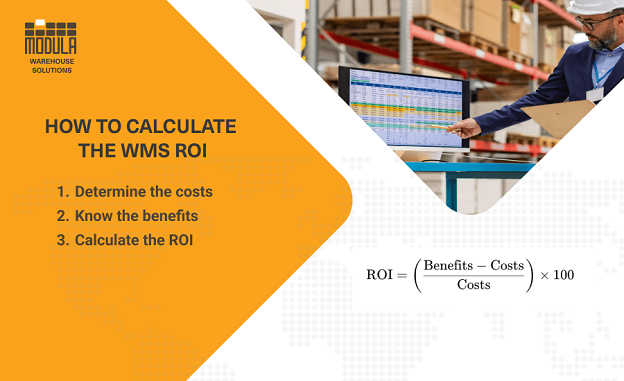
公式同样为: ROI = [(收益 – 成本) ÷ 成本] × 100
计算示例: 若 WMS 实施成本为 $100,000,三年内累计收益 $400,000:
ROI = [($400,000 – $100,000) / $100,000] x 100
ROI = [($300,000) / $100,000] x 100
ROI = 300%
此计算表明,在您的WMS中每投资一美元,您可以在三年内获得三美元的回报,这突显了巨大的投资回报。
适合投资机器人与 WMS 的行业
高吞吐量、对速度与精度有较高要求的行业,最适合引入仓库自动化技术,例如:
电商与零售
电商快速发展需要更高效的订单履行与库存控制。
例如,亚马逊采用机器人技术和先进的仓库管理系统来分拣包裹和管理库存,从而大幅缩短了配送时间。
制造业
机器人可自动搬运物料与组件,WMS 则提高库存与流程控制水平。
医药行业
机器人可分拣药品与包装,确保精度并降低污染风险。
WMS 提高分拣效率、追踪能力与配送速度。
食品与饮料
自动化系统帮助控制品质、管理易腐商品并优化装配与发货流程。
在乳制品厂,机器人和WMS简化了从装瓶到包装的操作,增强了产品处理能力,并确保了最佳的储存条件。
汽车行业
机器人可胜任焊接、喷涂与小部件组装等高精度工作。
WMS 则确保关键部件及时到位。
第三方物流(3PL)
3PL 企业通过机器人与 WMS 提高拣选效率与准确率。
加快履单速度,服务全球客户。
用自动化最大化投资回报
在 Modula 亚太,我们通过空间利用最大化、精度与生产力提升、增强操作安全性革新仓库运营。
Modula 垂直升降模组(VLM)
我们提供适用于高层仓储的 Modula 垂直升降模组(VLM)。
可通过 Copilot 控制器轻松交付物品。
可通过 Copilot 控制器轻松提取物品。
配有自动门、伸缩托盘等选配件,提高作业效率与可达性。
Modula 仓库管理系统(WMS)
Modula 提供多款先进仓库管理软件,支持远程监控与数据分析。
便于快速集成至 ERP、MRP、WMS、DMS 等现有平台。
无论是优化库存流程、提升存储效率还是提高订单准确率,Modula 的 ASRS 与 WMS 解决方案都能助你实现业务目标。

ROI for Warehouse Robotics and WMS [Timeline & Formula]
ROI for Warehouse Robotics and Warehouse Management System: Key Points
- You should see a return on investment in warehouse robotics within three to five years
- You might notice a return on investment from a warehouse management system (WMS) within three to six months
- To calculate the ROI of warehouse robotics, subtract the costs from the benefits, divide by the costs, and multiply by 100 to get the percentage

Warehouse robots have increased productivity by 30% across various businesses, making them a popular choice when you’re looking to enhance efficiency and minimise operational costs.
So when do they start delivering tangible financial benefits?
ROI for warehouse robotics and warehouse management systems can vary, usually spanning three to five years for robots and three to six months for WMS.
To gauge effectiveness, you need to calculate ROI.
In this guide, we will:
- Outline the ROI for warehouse robotics and WMS
- Share a step-by-step guide on how to calculate their ROI
- Explain how Modula APAC solutions can help maximise your returns
ROI for Warehouse Robotics
You can expect to see a return on your investment in warehouse robotics within three to five years.
Deciding whether to invest in warehouse robotics involves multiple factors, such as industry competitiveness and market share.
How To Calculate the ROI for Your Warehouse Robotics
Return on investment (ROI) is a performance measure that calculates the ratio between annual benefits and investment costs.
A higher percentage indicates a greater return, making the investment more attractive.
You must assess both the costs and benefits of this technology to calculate the ROI for your warehouse robotics.
We’ll guide you through this calculation to help you make informed decisions about your warehouse automation strategy.
1. Identify the Costs
First, determine the total investment required for the robotics system, which includes:
- Initial costs: This includes purchase, installation, and integration costs.
- Operational costs: Maintenance, repairs, software updates, and energy use.
Training costs: Staff training for system operation and maintenance.
Example: If you purchase five robots at $50,000 each, with $20,000 for installation and $10,000 annually for maintenance and training, you will spend a total of $270,000 initially.
2. Calculate Benefits
Then, quantify the financial benefits your business will gain from the robotics system. These might include:
- Labor savings: Decrease in labor costs due to automation.
- Increased productivity: Enhancements in throughput or faster inventory management.
- Quality improvements: Fewer errors and associated costs.
Example: If warehouse robots allow you to save $100,000 annually in labor, generate an additional $50,000 in profits through increased throughput, and cut $20,000 in error-related costs, your annual benefits will total $170,000.
3. Calculate ROI
Calculate the ROI by subtracting the total costs from the total benefits, dividing the result by the total costs, and then multiplying by 100 to express it as a percentage:
While these aren’t as easily quantifiable as financial returns, they still play a key role in shaping the decision-making process.

Example calculation:
- Year 1 costs: $270,000 (initial investment + maintenance + training)
- Year 1 benefits: $170,000
- Net year benefits: $170,000 – $270,000 = -$100,000 (loss in the first year)
How Do Warehouse Robotics Deliver a Quick ROI?
Warehouse robotics can deliver a quick return on investment (ROI) by enhancing efficiency and reducing costs. Here’s how these systems contribute to achieving rapid ROI.
1. Reduce Labor Costs
Robotic systems drastically cut manual labor costs in tasks like picking, packing, and sorting.
For instance, an autonomous mobile robot (AMR) can operate non-stop across multiple shifts, potentially halving labor costs.
If a warehouse spends $500,000 annually on these tasks, implementing AMRs could save $250,000 each year.
2. Increase Productivity and Throughput
Robots operate faster and longer than humans, significantly boosting productivity and saving time.
For example, a G2P system can triple order picking speeds, directly enhancing ROI by enabling $300,000 in additional annual revenue from faster processing.
3. Minimise Errors
Robots decrease errors more effectively than humans to cut costs related to returns, rework, and inaccuracies.
To illustrate, robotic scanners can decrease picking errors by as much as 90%. If errors usually cost a warehouse $100,000 annually, this can save $90,000 each year.
4. Optimise Space
Robotics enhance warehouse space utilisation, increasing storage density by up to 25% with automated storage and retrieval systems (ASRS). This efficiency can postpone or negate the need for expansion, significantly saving on real estate and operational costs.
Top 2 Robots With the Highest ROI
Various warehouse robotic types can help maximise your savings in the long run.
Below, we highlight different warehouse robots that yield significant savings and higher ROI.
1. Autonomous Mobile Robots (AMR)
Ideal for companies new to robotics and cautious of large initial investments, autonomous mobile robots (AMRs) seamlessly integrate into existing operations.
AMRs automate pallet and inventory movement, cutting labor costs and boosting facility efficiency.
By operating independently, they allow employees to concentrate on more critical activities, such as performing quality checks.
2. Goods-to-Person Robots
Warehouse robots deliver inventory to stationary pickers in the goods-to-person approach, eliminating non-essential movement and significantly reducing labor.
This system also maximises space by compactly storing more SKUs, enhancing order accuracy, and driving further cost savings.
Warehouse Management System (WMS) ROI Timeline
You can typically expect to see an ROI from implementing a warehouse management system (WMS) within three to six months.
More significant improvements and ROI accrue over three to 12 months as processes are streamlined.
How To Calculate Your WMS ROI
Here’s a step-by-step guide:
1. Determine the Costs
The first step in calculating your WMS’s ROI is to assess the implementation costs.
These include:
- Software licensing fees: The cost to purchase or license the WMS software.
- Implementation costs: Expenses for installing and configuring the software and any necessary hardware or equipment.
- Training costs: Expenses for employee training can include initial sessions and ongoing support for proficiency.
- Maintenance costs: Ongoing expenses for maintenance and support, including software updates and technical support.
2. Acknowledge the Benefits
The next step is to recognise the benefits of using a WMS, which include:
- Increased productivity and efficiency: A WMS streamlines specific tasks such as inventory tracking and order processing.
- Reduced errors and waste: A WMS minimises errors and waste by automating inventory updates and offering real-time stock visibility, preventing overstocking and understocking.
- Improved accuracy: A WMS provides detailed inventory and order data, enabling precise decision-making and operational adjustments.
- Better customer service: A WMS streamlines order fulfillment, shortens delivery times, and ensures reliable tracking, boosting customer satisfaction.
3. Calculate Your WMS ROI
ROI = [(Benefits – Costs) / Costs] x 100
For example, if your WMS implementation costs $100,000 and provides $400,000 in benefits over three years, you would calculate the ROI as follows:
ROI = [($400,000 – $100,000) / $100,000] x 100
ROI = [($300,000) / $100,000] x 100
ROI = 300%
This calculation indicates that for every dollar invested in your WMS, you can expect to receive three dollars in return over a three-year period, highlighting a substantial return on investment.

Which Industries Should Invest in Warehouse Robotics and WMS?
Industries that benefit most from warehouse robotics and WMS typically involve high-volume operations or demand precise and rapid handling, such as:
1. ECommerce and Retail
The surge in online shopping requires faster order fulfillment and precise inventory management.
For example, Amazon employs robotics and advanced WMS to sort packages and manage inventories, drastically reducing delivery times.
2. Manufacturing
Robots automate material and component movement, streamlining supply chains, while WMS enhance inventory control and workflow efficiency.
3. Pharmaceuticals
Robots sort pills, package medications, and handle delicate materials in pharmaceutical facilities to ensure accuracy and reduce contamination risks.
On the other hand, warehouse management systems optimise storage layouts, improve inventory tracking, and boost distribution speed and efficiency in pharmaceutical facilities.
4. Food and Beverage
Automation ensures consistent quality control, manages perishable goods, and enhances packing and shipping operations.
In dairy factories, robots and WMS streamline operations from bottling to packaging, enhancing product handling and ensuring optimal storage conditions.
5. Automotive
In the automotive industry, warehouse robots excel in performing high-precision, repetitive tasks such as welding, painting, and assembling small parts, further decreasing errors.
These technologies also accelerate engine and chassis assembly, boosting production efficiency by ensuring components are available when needed.
6. Third-Party Logistics (3PL)
3PLs leverage robotics to enhance the accuracy and efficiency of picking and packing processes across various industries.
For example, logistics companies utilise robots and WMS to automate picking and packing, improve inventory accuracy, and expedite order fulfillment globally.
Maximise Your ROI With Warehouse Automation
At Modula APAC, we transform warehouse operations by maximising space utilisation, boosting precision and productivity, and enhancing safety, among other advantages.
Modula Vertical Lift Modules (VLMS)
Our offerings include the Modula Vertical Lift Modules (VLMs), ideal for warehouses with high ceilings.
These automated storage and retrieval systems efficiently manage large inventories and swiftly deliver items with just a click on the Copilot controller.
These intelligent storage systems efficiently house vast inventories and promptly fetch items with a mere click on the Copilot controller.
These VLMs come with optionals, such as automatic doors and telescopic bays to improve accessibility and speed up the retrieval process.
Modula Warehouse Management System (WMS)
Modula offers a variety of advanced warehouse management software solutions that provide remote support and analytics solutions to different organisations.
These software packages are easy to install and integrate seamlessly with our customers’ existing ERP, MRP, WMS, and DMS platforms.
Whether you’re aiming to refine your inventory processes, boost storage efficiency, or enhance order accuracy, Modula’s ASRS and WMS solutions can help meet your needs and propel your business to success.